


Achilleion Palace in Corfu: The Romantic Story of Empress Sisi
Hidden among the lush green hills of Gastouri, just a short distance from Corfu Town, stands one of the island’s most enchanting landmarks: the Achilleion Palace.
More than a magnificent royal residence, the Achilleion is a place where history, Greek mythology, art and a deeply personal story come together.
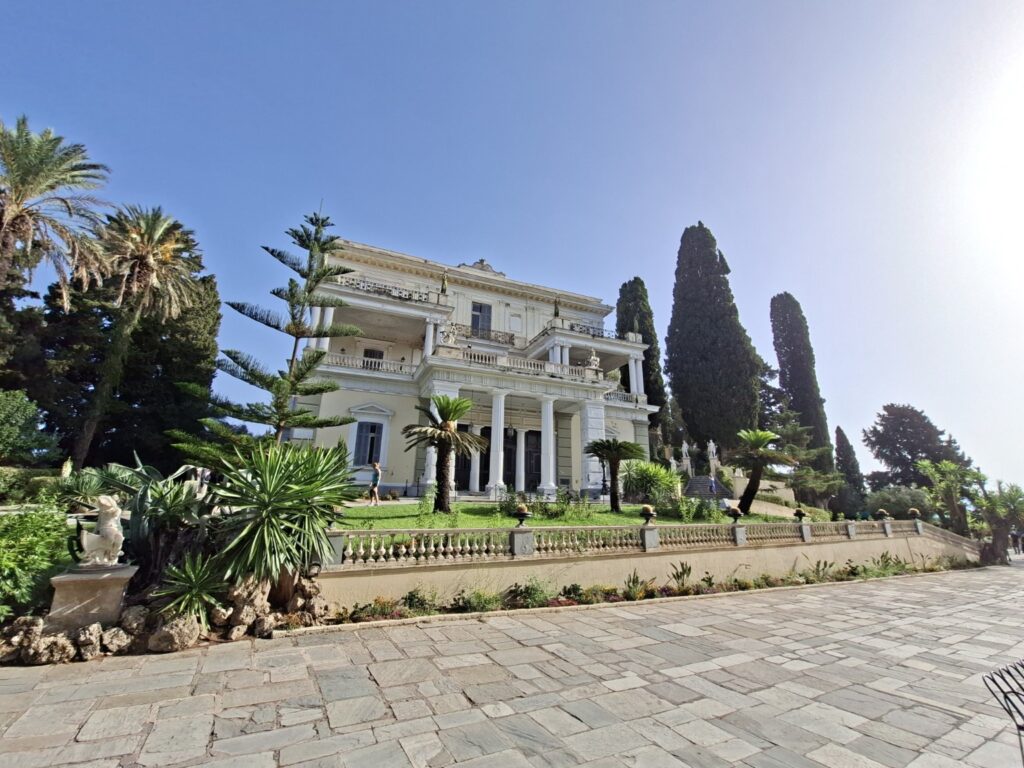
Built for Empress Elisabeth of Austria, affectionately known as Sisi, this extraordinary palace was created as a peaceful refuge from the pressures of imperial life and the sorrow that marked her personal journey.
Surrounded by beautiful gardens, elegant sculptures and breathtaking views of the Ionian Sea, the Achilleion still carries the romantic spirit of a woman who fell deeply in love with Corfu.
Step into the fascinating story of an empress, a legendary Greek hero and a palace unlike any other.
Empress Sisi: The Woman Behind the Achilleion Palace
Empress Elisabeth of Austria was one of the most fascinating and unconventional royal figures of 19th-century Europe.
Admired for her beauty, intelligence and independent spirit, Sisi often struggled with the strict etiquette and responsibilities of imperial court life.
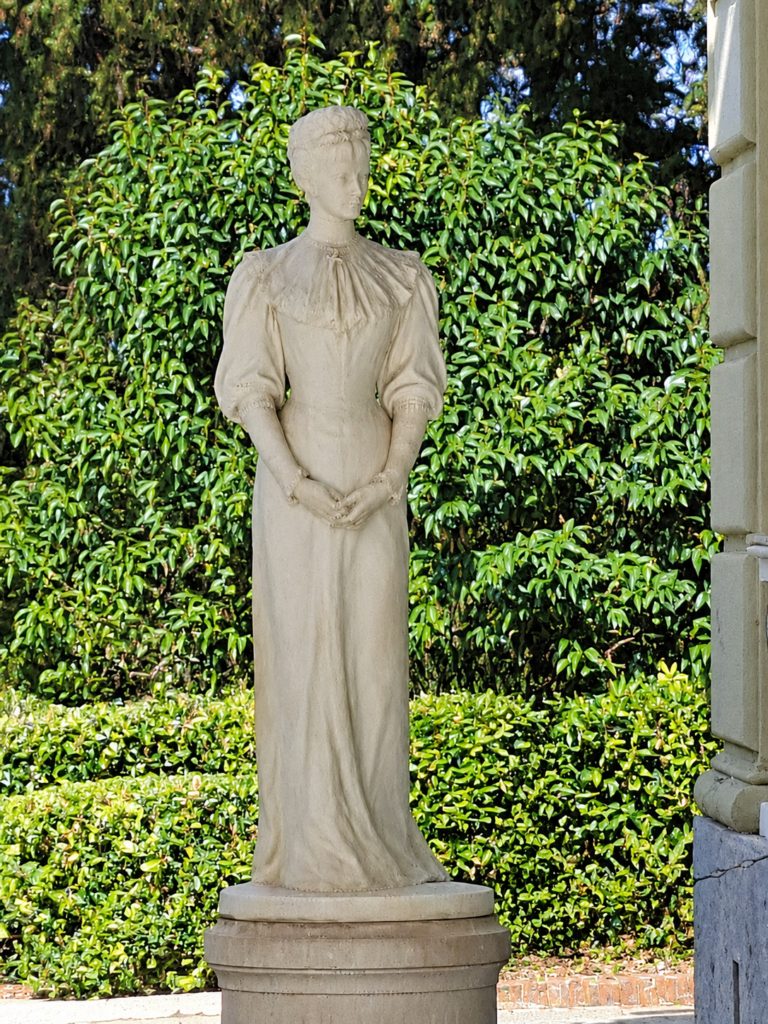
She loved travelling, poetry, nature and the ancient Greek world. Her passion for Greece was more than a passing interest: she studied the Greek language, literature and mythology, developing a profound admiration for its culture.
During her travels, she discovered Corfu, an island whose natural beauty, peaceful landscapes and rich history captured her heart.
Following the tragic death of her only son, Crown Prince Rudolf, in 1889, Sisi sought comfort far from Vienna.
Corfu became her sanctuary, and the Achilleion Palace was born from her desire to create a world of beauty, reflection and tranquillity.
A Palace Inspired by Ancient Greece
Built between 1889 and 1891, the Achilleion Palace reflects Sisi’s admiration for classical Greek civilisation.
The palace was designed in an elegant neoclassical style, with architectural influences inspired by ancient Greek and Roman art.
Its grand staircases, decorative columns, magnificent frescoes and sculptures were carefully chosen to celebrate the beauty and ideals of classical antiquity.
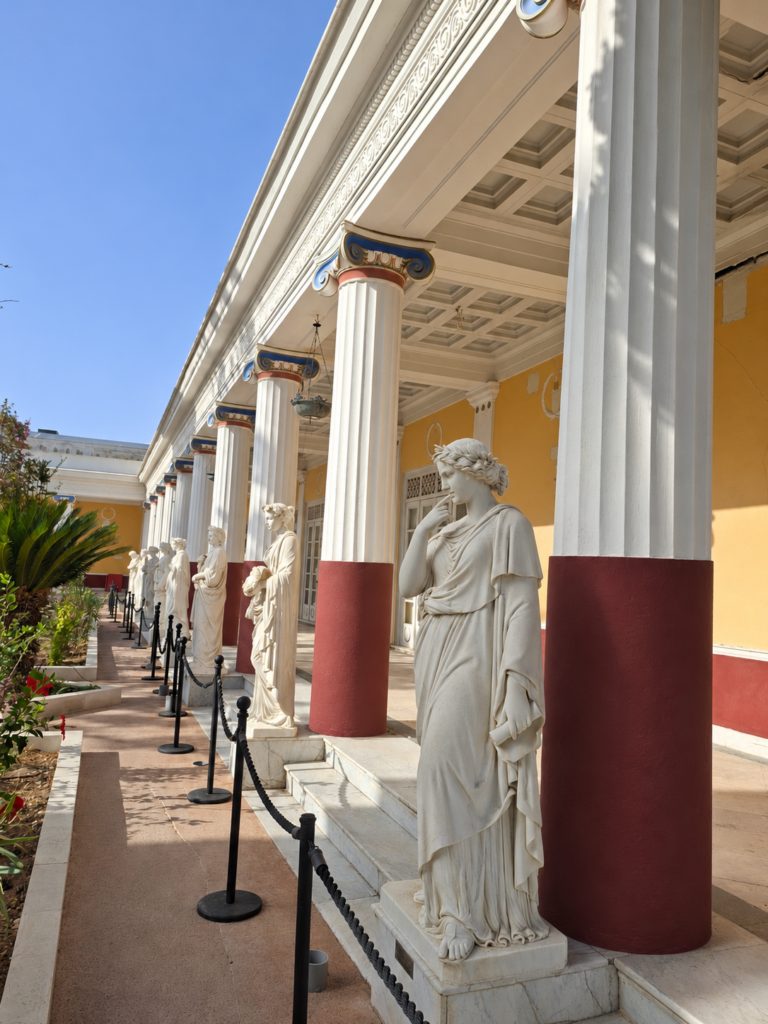
The palace was named Achilleion, in honour of Achilles, the legendary hero of Homer’s Iliad.
For Sisi, Achilles represented much more than courage and physical strength. His tragic destiny, emotional vulnerability and heroic sacrifice reflected themes that deeply resonated with her own life.
This connection between mythology and personal sorrow gives the Achilleion its extraordinary character.
The Dying Achilles: A Symbol of Sisi’s Soul
Among the most remarkable sculptures associated with the Achilleion is the famous Dying Achilles, created by German sculptor Ernst Herter.
The marble statue portrays the legendary Greek warrior in his final moments, wounded by an arrow in his heel.
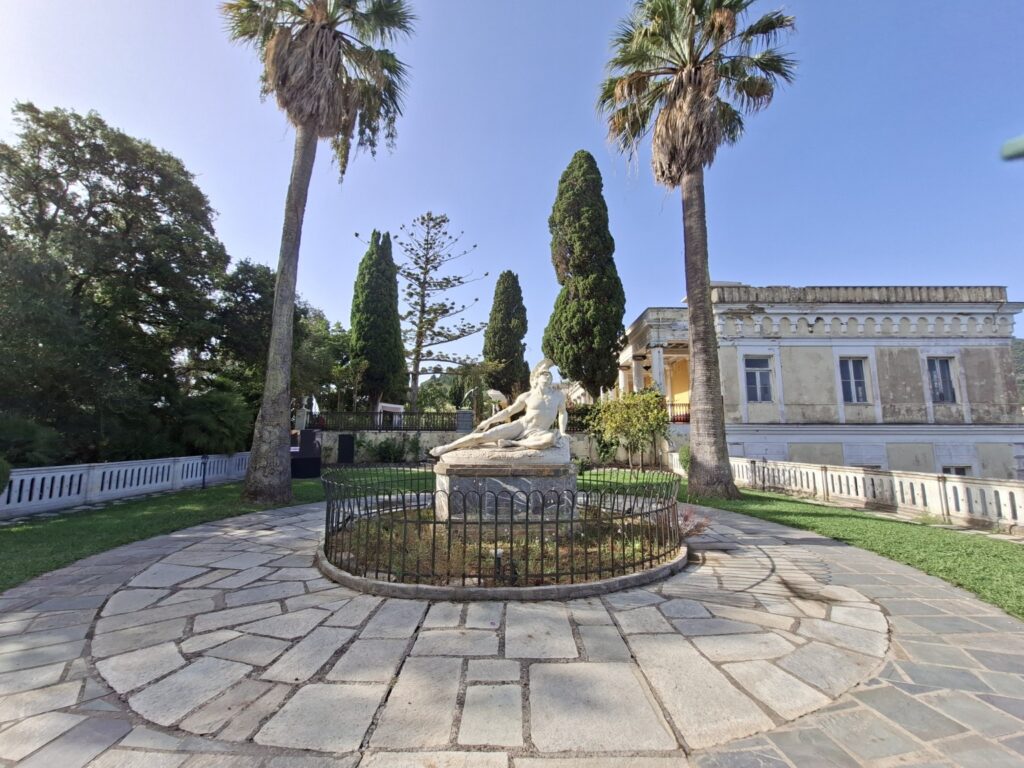
Unlike traditional representations of victorious heroes, this Achilles appears vulnerable, suffering and deeply human.
His expression and posture capture the tragedy of a hero who, despite his extraordinary strength, cannot escape his destiny.
For Empress Sisi, who had experienced profound personal loss, the sculpture held particular emotional significance.
It is perhaps the most touching artistic expression of the palace’s original spirit: a place where beauty and melancholy exist side by side.
Kaiser Wilhelm II and the Victorious Achilles
After Sisi’s assassination in 1898, the Achilleion eventually passed into the hands of Kaiser Wilhelm II of Germany, who purchased the estate in 1907.
Like Sisi, the Kaiser admired Corfu and ancient Greek civilisation. However, his vision of Achilles was very different.
Where Sisi had been drawn to the tragic and vulnerable hero, Wilhelm preferred the image of strength, victory and imperial power.
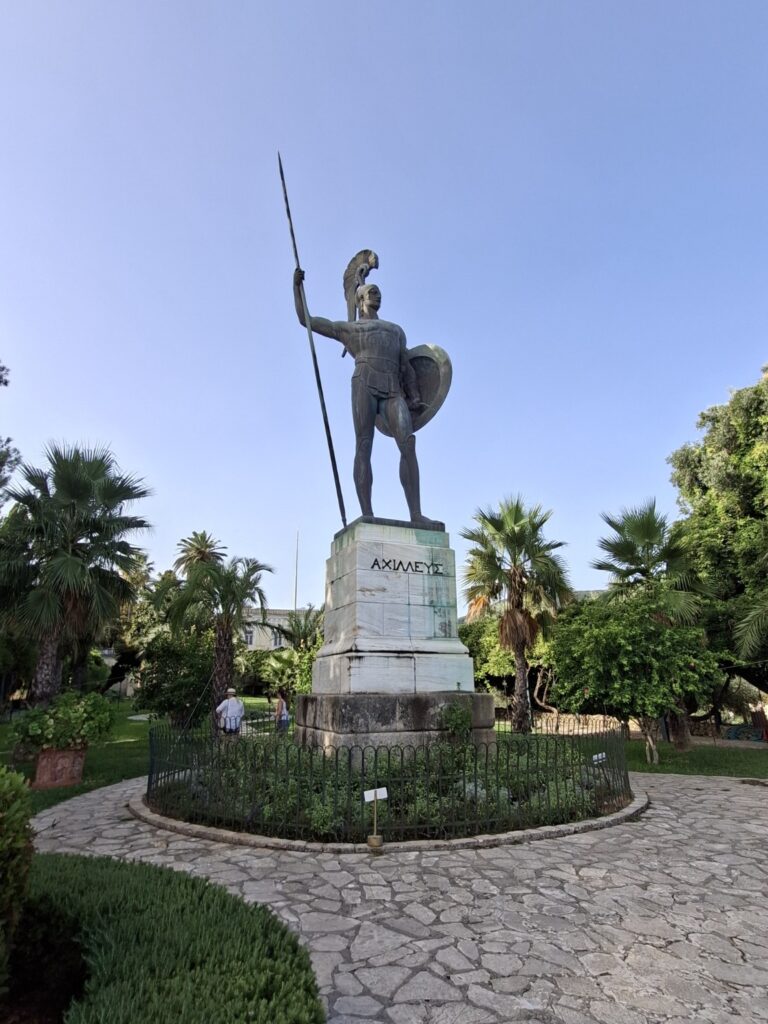
He commissioned the impressive bronze statue of the Victorious Achilles, depicting the warrior standing proudly with his weapons.
The contrast between the two sculptures is fascinating.
The Dying Achilles represents suffering and human vulnerability, while the Victorious Achilles celebrates power, triumph and glory.
Together, they tell the story of two remarkable European personalities whose different interpretations of the same mythical hero shaped the identity of the Achilleion.
The Imperial Gardens: A Mediterranean Paradise
One of the most enchanting features of the Achilleion is its magnificent gardens.
Surrounded by lush Mediterranean vegetation, elegant terraces, tall cypress trees and beautiful sculptures, the gardens create a peaceful atmosphere that seems far removed from everyday life.
As you wander along the paths, you can imagine Empress Sisi enjoying quiet walks, admiring the natural landscape and finding inspiration in the beauty of Corfu.
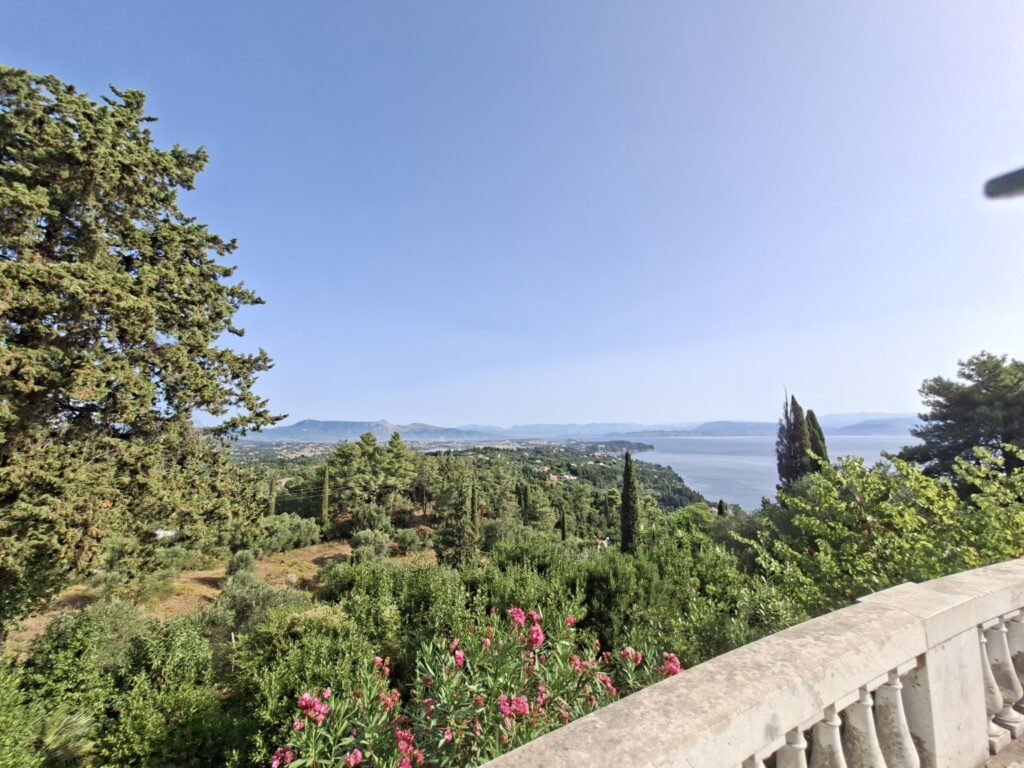
From the terraces, visitors can enjoy spectacular views towards the Ionian Sea, the surrounding countryside and the eastern coast of the island.
The combination of classical art, natural beauty and imperial history makes the gardens an unforgettable part of the Achilleion experience.
For photography enthusiasts, the elegant sculptures, architectural details and panoramic views provide wonderful opportunities to capture the romantic character of the estate.
From Imperial Residence to Historic Landmark
The history of the Achilleion did not end with its royal owners.
During the 20th century, the palace witnessed significant changes and played different roles during periods of European conflict.
It was used for military and medical purposes during the World Wars and later became a casino before eventually developing into one of Corfu’s best-known cultural attractions.
Today, the Achilleion remains an important symbol of the island’s connection with European history, art and royalty.
Its architecture, sculptures and gardens preserve the memories of the people who once lived there and the remarkable stories that shaped its past.
Visiting Achilleion Palace Today
The Achilleion is located near the traditional village of Gastouri, approximately 10 kilometres southwest of Corfu Town.
Important visitor information: The palace is undergoing restoration works. Currently, visitors can explore the outdoor areas and the Imperial Gardens, while the interior of the palace remains closed. While the palace interiors are closed for restoration, visitors can still learn about the Achilleion on large screens that trace the palace’s history and highlight its architectural features.
Even with these restrictions, the estate offers an opportunity to admire its historic architecture, beautiful surroundings and impressive outdoor sculptures.
Before planning your visit, we recommend checking the official Achilleion website for the latest information about access, opening hours and tickets.
Opening Hours and Tickets
- April to October: Daily, 08:00–20:00
- November to March: Daily, 08:00–16:00
- General admission: €7
- Reduced admission: €5 for eligible visitors
Opening arrangements and prices may change, particularly during the ongoing restoration.
Official website: https://achillion-corfu.gr/?lang=en
How to Get to Achilleion Palace from Corfu Town
The Achilleion is easily reached from Corfu Town, making it a convenient destination for a half-day excursion.
Visitors can travel by car, taxi or local bus towards Gastouri and the Achilleion.
If you are exploring the island without a rental car, check the current Corfu City Bus timetable before setting off.
The journey also offers an opportunity to admire Corfu’s green countryside and traditional villages.
Nostalgia Local Tip: Combine your visit to the Achilleion with a leisurely stop in Gastouri village or continue towards Benitses, a picturesque seaside village where you can enjoy a coffee, a traditional meal or a relaxing walk by the sea.
Why the Achilleion Is Worth Visiting
The Achilleion is much more than a beautiful palace.
It is a place where the elegance of imperial Europe meets the timeless fascination of ancient Greece.
It tells the story of a remarkable woman searching for peace, a German emperor inspired by classical ideals and a legendary hero whose story has captivated generations.
Whether you are passionate about history, fascinated by Greek mythology or simply enjoy discovering beautiful places, the Achilleion offers a memorable glimpse into Corfu’s rich cultural heritage.
And perhaps its greatest charm lies in the feeling that, among its gardens and sculptures, a little of Sisi’s romantic spirit still remains.
Discover the Achilleion While Staying at Nostalgia Corfu Town Apartments
Corfu is an island filled with extraordinary stories, and the Achilleion is one of its most fascinating chapters.
At Nostalgia Corfu Town Apartments, you can enjoy the comfort of your own apartment while discovering the island’s historic landmarks, charming villages and beautiful natural landscapes.
Our convenient location close to Corfu Town makes it easy to plan excursions and explore the island at your own pace.
We are always happy to share our local recommendations and help you discover the places that make Corfu so special.
Come and explore the romantic side of Corfu, where history, mythology and natural beauty create memories that last a lifetime.
